
Knife guides
Japanese Chef Knives: A Complete Guide to Finding the Blade That Suits You
September 28, 2026
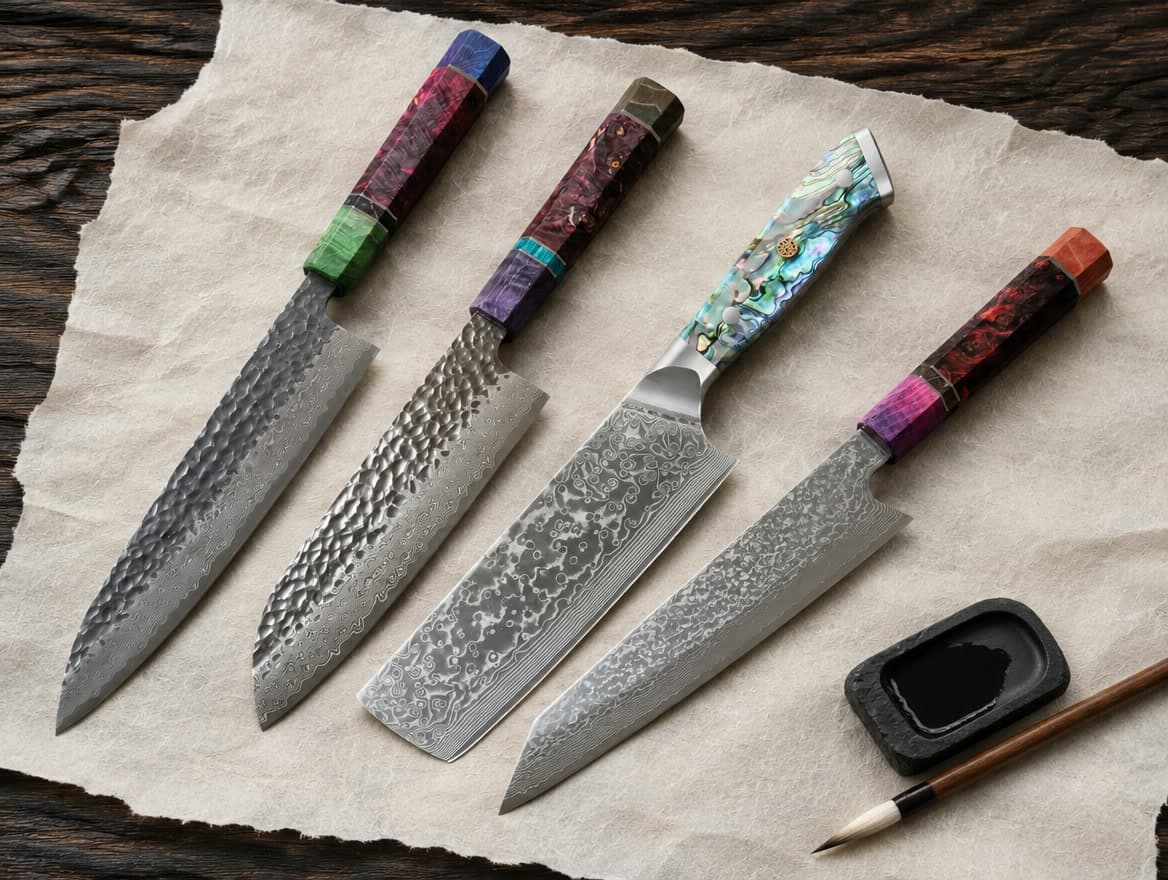
Japanese chef knives are precise kitchen tools built with slim profiles, hardened steels and specialized shapes that give you controlled cutting. Which Japanese knife suits you depends on how you cook, the blade shape you like, the type of steel, how you look after your knives and what you want to spend.
Japanese chef knives: what are they?
Japanese chef knives are kitchen blades built around precise cutting, refined blade geometry and traditional craftsmanship. Where many Western-style knives are made for heavier chopping, Japanese blades tend to have slimmer profiles, keener edges and a carefully balanced build suited to detailed prep work.
How a Japanese knife performs comes down to several elements working together: the choice of steel, the heat treatment, blade thickness, edge angle and handle design. Together they shape how the knife feels in your hand, how smoothly it glides through food, and how it holds up over the years.
Knife-making in Japan has deep roots in craftsmanship and metallurgy. HOSHIGANE designs Japanese-style knives built from Damascus steel around a VG-10 core for a balance of durability, sharpness and refined design.
If you are picking out your first Japanese blade, the real starting point for finding the right tool is understanding how a knife's style connects to the way you cook.
The types of japanese chef knife
Japanese chef knives come in a number of specialized shapes, each built for a different way of preparing food. A chef working on proteins, a home cook preparing vegetables and a collector looking for craftsmanship may each lean towards a different blade profile.
The Japanese kitchen knives you will meet most often:
KNIFE TYPE
IDEAL FOR
USUAL SIZE
WHO IT SUITS
Gyuto
All-round prep
180-240mm
Professional chefs and dedicated cooks
Santoku
Daily slicing and chopping
165-180mm
Home cooks
Nakiri
Vegetables
165-180mm
Vegetable prep
Kiritsuke
Precise cuts
210mm+
Seasoned cooks
Petty
Fine detail work
120-150mm
Small prep jobs
Every knife shape strikes its own balance between blade length, cutting motion and control. Picking a blade on looks alone can leave you with a knife that does not fit how you cook.
Gyuto: the all-purpose japanese chef knife
The Gyuto is widely seen as Japan's answer to the Western chef knife. It ranks among the most versatile blade styles, built to cover a broad range of kitchen jobs, from slicing meat to prepping vegetables and chopping herbs.
Gyuto blades commonly come in 210mm and 240mm. The longer profile gives you room to cut, while the slimmer geometry lets the blade move precisely through food.
Most Gyuto knives have a double bevel edge, so they work for left-handed and right-handed cooks alike. Next to many Western chef knives, a Gyuto usually feels lighter and cuts with a slimmer profile.
Professional chefs and seasoned home cooks often pick a Gyuto when they want a single main knife that can take on most of their kitchen prep.
Santoku: the japanese kitchen knife for every day
The Santoku ranks among the best-known Japanese kitchen knife styles. Its name means “three virtues”, a traditional nod to its skill at three core kitchen tasks: slicing, chopping and mincing.
Shorter in the blade than many Gyuto knives, a Santoku usually measures 165mm to 180mm. That compact size makes it comfortable for daily cooking, particularly in home kitchens where work space is tight.
Santoku knives are usually used with a push cut rather than the rocking motion people tend to associate with Western chef knives. Thanks to their balance, manageable size and versatility, they are a favourite with cooks who want a practical blade for every day.
Nakiri and kiritsuke: japanese blades for specialized work
Japanese knife makers also craft specialized blades for particular ways of preparing food.
THE NAKIRI
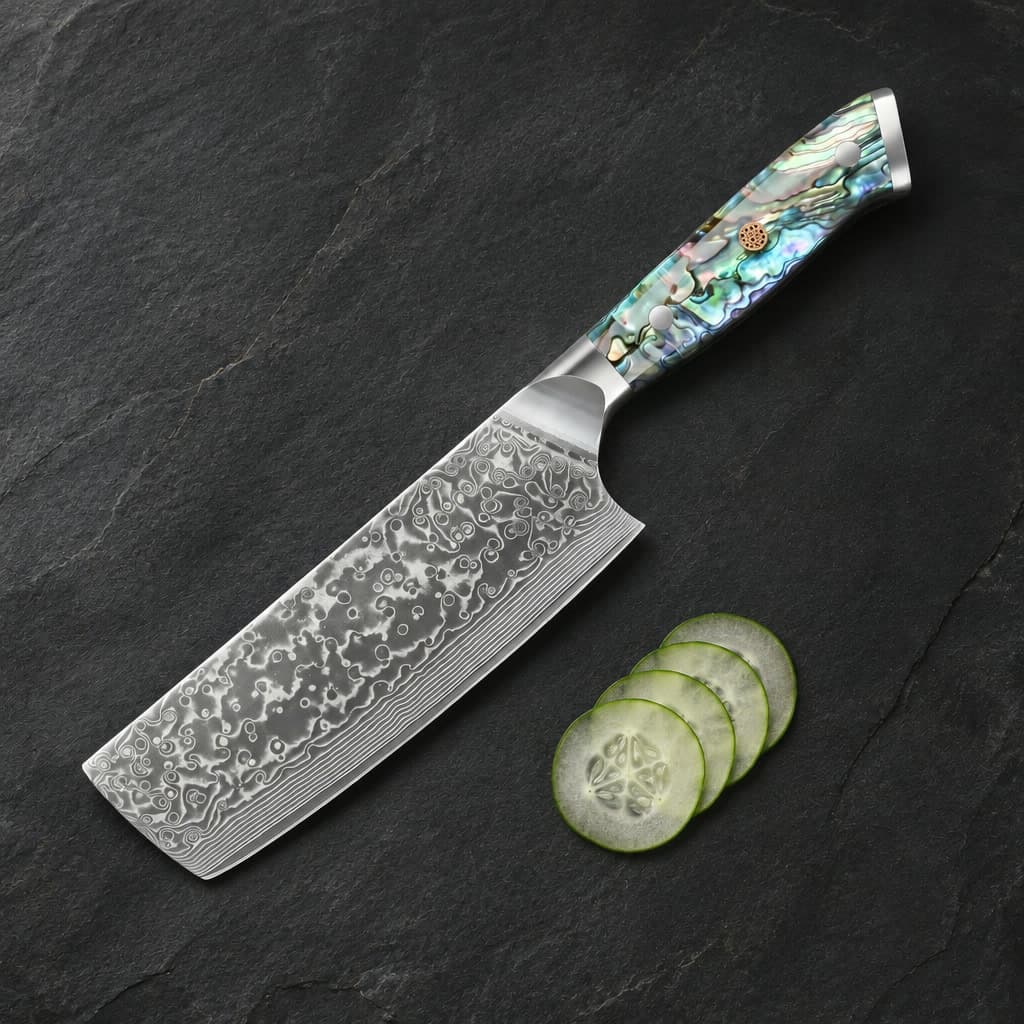
The Nakiri is built mainly for preparing vegetables. With its straight edge and squared-off blade, it meets the cutting board evenly along its length, which makes it efficient on leafy greens, root vegetables and all kinds of produce.
Its flat edge invites a straight up-and-down chop instead of a rocking cut.
THE KIRITSUKE
The Kiritsuke has a longer, more refined blade made for precise work. Long associated with experienced Japanese chefs, it demands more control because of its length and its pointed tip.
A Kiritsuke chef knife lends itself to detailed slicing, vegetable prep and cuts made for presentation, where accuracy counts.
What japanese chef knives are made of: the main steel types
The steel inside a Japanese knife weighs heavily on its sharpness, edge retention, upkeep and overall performance. Each steel gives the user a different experience, and no one steel fits every way of cooking.
Top-tier Japanese chef knives tend to rely on carefully chosen steels that strike a balance between hardness, durability and how they sharpen.
STEEL
TRAITS
UPKEEP
VG-10
Stainless steel with well-balanced edge retention
Easy upkeep
SG2/R2
High-performance premium powder steel
Needs proper care
White Steel
Prized for its outstanding sharpness potential
Needs more upkeep
Blue Steel
Geared towards edge retention and durability
Some care
STAINLESS VS CARBON STEEL
Cooks who want simpler upkeep often turn to stainless steels, since they resist corrosion and staining. VG-10 shows up in many Japanese kitchen knives because it brings together hardness, corrosion resistance and dependable edge performance.
Carbon steels can reach exceptionally sharp edges, and many seasoned cooks value them. They do need more attention, though, because moisture and acidic ingredients can mark the surface of the blade.
HARDNESS AND HOW LONG THE EDGE LASTS
Japanese knives tend to use harder steel than many traditional Western kitchen knives. Hardness is usually measured on the Rockwell C scale (HRC), and a lot of Japanese blades land at around 58-62 HRC.
Greater hardness can support slimmer edges that stay sharp longer, but harder blades also call for careful handling. They are a poor fit for jobs that involve bones, frozen food or heavy twisting.
What sets high end japanese chef knives apart?
High end Japanese chef knives stand out through the care put into materials, build, finishing and blade geometry. The gap is not just about the steel, but about how the whole knife is designed and finished.
FEATURE
ORDINARY KNIFE
HIGH-END JAPANESE KNIFE
Steel
Entry-level stainless steel
VG-10, SG2, premium steels
Build
Made by machine
Finished by hand
Balance
Basic ergonomics
Refined handling
Edge
Cuts adequately
Precise blade geometry
A premium Japanese knife usually shows close attention to every part. Blade profile, handle shape, weight distribution and finishing methods all play a role in how the knife behaves while you prep.
Finishing by hand is a key part of Japanese knife craftsmanship. It lets makers refine the blade surfaces, fine-tune the balance and give you a more controlled cut.
Hand-finished Japanese knives, Japanese manufacturing heritage, Damascus designs and traditional knife-making methods lie at the heart of HOSHIGANE's product philosophy.
To chefs and collectors, a high-end knife is more than a kitchen tool: it is a showcase of craftsmanship, choice of materials and value that lasts for years of ownership.
Japanese damascus chef knives: where looks and performance meet
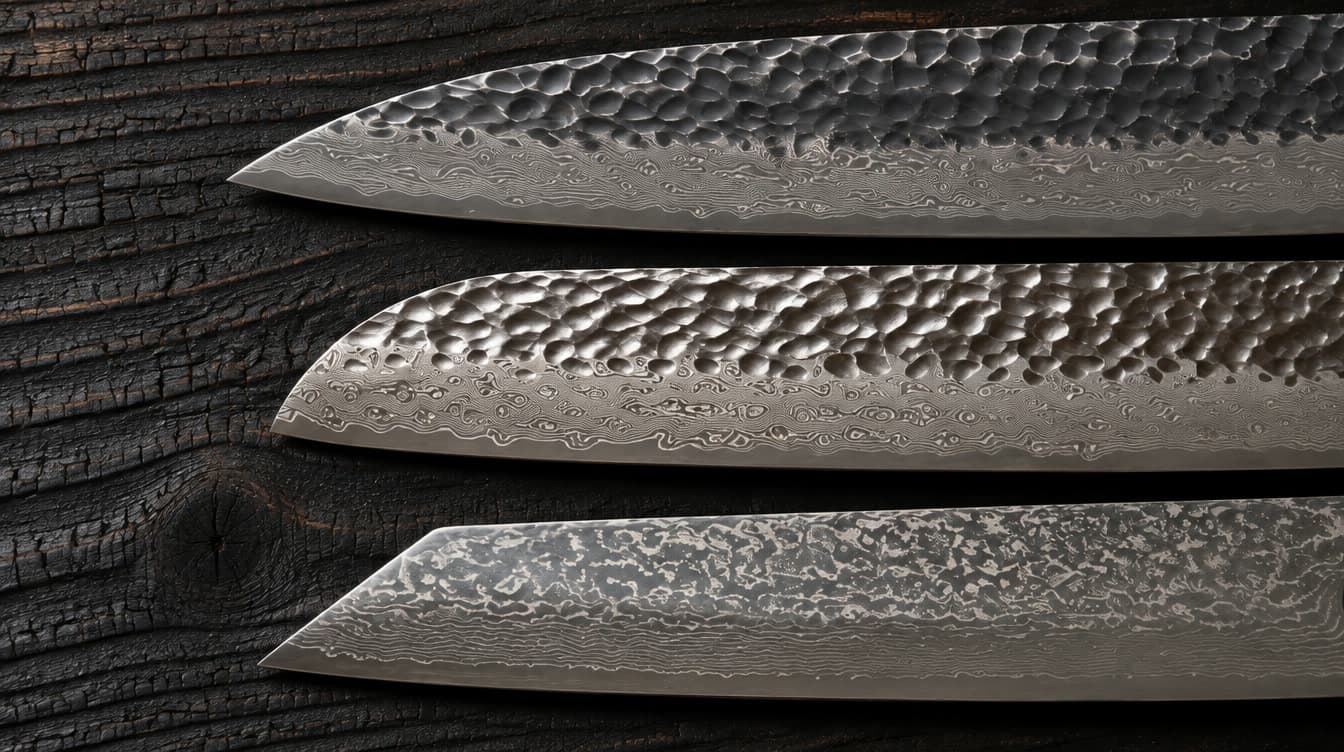
Japanese Damascus chef knives pair a traditional look with modern blade engineering. The signature layered pattern on a Damascus blade comes from how multiple layers of steel are arranged and finished, giving each blade surface a one-of-a-kind appearance.
The Damascus pattern on its own does not decide how a knife cuts. Core steel, heat treatment, blade geometry and edge preparation matter far more for sharpness, durability and edge retention.
DAMASCUS ELEMENT
WHAT YOU GET
Layered outer steel
An ornamental blade pattern with visual character
VG-10 core
Cutting performance and resistance to corrosion
Hardened steel
Durability and long edge retention
HOSHIGANE Damascus designs are built in layers around VG-10 cores, bringing traditional aesthetics together with practical performance in the kitchen.
For collectors and keen cooks, Japanese Damascus chef knives can deliver both real performance and craftsmanship value. Judge a well-made Damascus knife on its steel quality, build, balance and finishing, not on the pattern alone.
Japanese vs western chef knives
Japanese and Western chef knives grew out of different culinary traditions. Either style can perform brilliantly, but each design reflects its own approach to cutting.
FEATURE
JAPANESE KNIFE
WESTERN KNIFE
Weight
Light
Weightier
Edge angle
Sharper angle
Broader
Blade thickness
Slimmer
Thicker
How it cuts
Precise slicing
Rocking chop
Japanese blades generally put precision, controlled cuts and respect for the ingredient first. Thanks to their slimmer geometry, they slice cleanly with less drag.
Western chef knives are, as a rule, built heavier and with thicker blades, a combination that can lend itself to more forceful cutting techniques.
Which is right for you comes down to your technique, how you cook and how much upkeep you prefer. A cook who loves delicate slicing may lean towards a Japanese blade, whereas someone used to heavier chopping may feel more at home with a Western-style knife.
Choosing the right japanese chef knife
Finding the right Japanese chef knife begins with knowing how you prepare food. The blade shape, size, type of steel and upkeep it needs should fit your routine in the kitchen.
PROFESSIONAL CHEFS
In professional kitchens, a Gyuto of 210mm to 240mm is often a sensible pick: it offers enough blade length to handle bigger ingredients while still keeping you in control during detailed prep.
HOME COOKS
For daily cooking, a Santoku or a Gyuto can both serve you well. A Santoku is compact and easy to handle, while a Gyuto gives more versatility to cooks who work with a broader mix of ingredients.
VEGETABLE PREP
A Nakiri is made for cooks who prep vegetables often. Its straight edge helps keep chopping even and cuts through produce cleanly.
COLLECTORS
Collectors are often drawn to Damascus or handcrafted premium knives for the way they bring together materials, craftsmanship and visual design.
- Before you pick a knife, think about:
- How you cook and what you cook most
- Your hand size and a comfortable grip
- How much work space you have
- How much upkeep you are happy with
- What you want to spend
HOSHIGANE makes Japanese kitchen knives in a range of categories, including Gyuto, Santoku, Nakiri, Kiritsuke, Utility, Petty knives, Cleavers and knife sets.
Looking after japanese chef knives
Good care keeps a Japanese knife sharp, its finish intact and its performance steady. Even a finely crafted blade needs regular upkeep to keep cutting at its best.
Make these habits your routine:
- Wash the knife by hand after each use
- Dry the blade right after washing
- Cut on a suitable cutting board, such as wood or a soft synthetic surface
- Keep it away from bones, frozen food and other hard materials
- Keep the edge in shape with the right sharpening tools
How to sharpen japanese chef knives
Japanese chef knives are usually sharpened on whetstones. This approach gives you precise control over the edge and helps keep the blade's original geometry.
Light, regular sharpening generally beats waiting until the knife is very dull. Holding the right angle while you sharpen helps the knife keep performing as it was meant to.
A suggested japanese knife collection
A well-equipped kitchen does not call for a big pile of knives. A thoughtfully chosen collection can handle most prep tasks.
A sensible starter collection includes:
- Gyuto knife Your main all-purpose blade for vegetables, proteins and general prep.
- Petty knife A smaller blade for peeling, trimming and fine detail work.
- Nakiri or Santoku knife Handy for prepping vegetables and daily cooking.
- Knife set upgrade path Bring in specialized blades such as Kiritsuke or Damascus knives as your cooking grows.
If you are building a matching collection, HOSHIGANE's Japanese knife sets give you several blades, each designed for a different kitchen task.
Japanese chef knives: common questions
WHICH JAPANESE CHEF KNIFE IS BEST FOR A BEGINNER?
For beginners, a Santoku or a Gyuto is often a sensible place to start. A Santoku is compact and easy to handle, while a Gyuto covers a wider range of cooking tasks.
ARE JAPANESE CHEF KNIVES BETTER THAN WESTERN ONES?
Japanese and Western knives follow different designs. Japanese knives usually put the focus on slimmer blades and precise cutting, while Western knives tend to favour a heavier build and other cutting techniques.
WHICH STEELS GO INTO JAPANESE CHEF KNIVES?
Japanese chef knives may be made from stainless steels such as VG-10, powder steels like SG2/R2, or carbon steels such as White Steel and Blue Steel. Each one behaves differently when it comes to edge retention, upkeep and sharpening.
IS A JAPANESE DAMASCUS CHEF KNIFE WORTH IT?
A Japanese Damascus chef knife can make sense for buyers who appreciate layered blade designs, craftsmanship and premium materials. The core steel and the quality of the build count for more than the Damascus pattern by itself.
HOW SHOULD YOU CARE FOR JAPANESE CHEF KNIVES?
Wash Japanese knives by hand, dry them right away, store them safely and sharpen them with suitable tools such as whetstones. Good upkeep helps the edge keep performing and the blade stay in good shape.
Match your japanese knife to the way you cook
HOW YOU COOK
KNIFE TO PICK
WHY
Daily cooking
Gyuto
Handles prep across all kinds of ingredients
Mostly vegetables
Nakiri
Its flat edge is made for cutting vegetables
Small kitchen
Santoku
Easy to handle and practical every day
Professional prep
Gyuto or Kiritsuke
Precision and greater control over long cuts
Japanese chef knives bring together craftsmanship, engineering and culinary tradition. Once you understand blade shapes, steel options and care needs, you can pick a knife that suits the way you cook and keeps performing for years.
Browse the HOSHIGANE collection of handcrafted Japanese kitchen knives and find the blade made for the way you prep.