
Knife guides
The Kiritsuke Knife: A Guide to the Head Chef's Blade
October 13, 2026
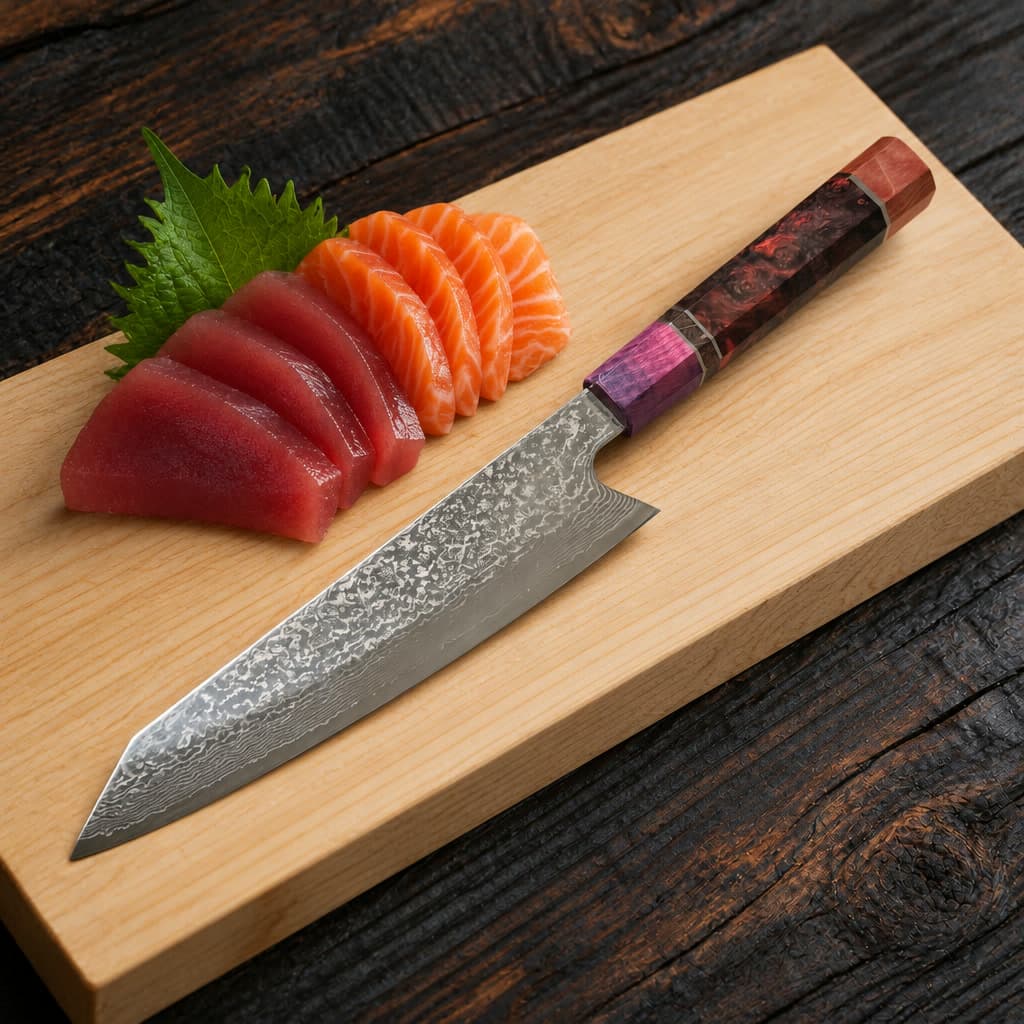
The Japanese kiritsuke is a distinctive kitchen knife long linked with seasoned head chefs, recognisable by its long, fairly flat edge and its angled point. The traditional single-bevel version calls for specialised technique, while today's double-bevel kiritsuke-gyuto offers an easier way in.
What is a Japanese kiritsuke knife?
The kiritsuke (切付) is a Japanese kitchen knife you can spot by its long blade, fairly flat edge, and signature angled point. That outline distinguishes it from the rounder shape of a standard gyuto, though the precise form and cutting behaviour differ from one maker and model to the next.
The name actually refers to two related designs, and it pays to tell them apart. A traditional kiritsuke usually has a single-bevel grind, whereas a modern kiritsuke-gyuto tends to pair a double-bevel edge with a chef's knife profile and the same pointed tip.
The gap between them goes beyond looks. How the bevel is built shapes your cutting technique, your sharpening needs, and the way the blade behaves in food.
Its main traits:
- Blade profile: A long edge with only a slight curve, well suited to controlled push cuts and slicing.
- Angled tip: Helps with precise cuts and fine work, provided it is used with care.
- Bevel geometry: Single-bevel by tradition, though modern double-bevel versions are easy to find.
- Professional heritage: Tied to skilled Japanese kitchen work and the experience expected of senior chefs.
For cooks who like the distinctive shape but don't want to learn traditional single-bevel sharpening and handling, a kiritsuke-gyuto is the more familiar choice.
Why was the kiritsuke traditionally kept for head chefs?
SKILL AND THE KITCHEN HIERARCHY
The traditional kiritsuke is often linked with seasoned head chefs because it requires a solid grasp of blade control, cutting technique, and upkeep. In some professional Japanese kitchens, the tools a chef used, and the skill expected of them, mirrored their rank and responsibilities.
Its standing is closely tied to traditional Japanese knife work. Single-bevel blades have an asymmetric geometry that affects how they travel through ingredients, and keeping their edges in shape takes more know-how than everyday double-bevel sharpening.
The kiritsuke is also often called a cross between the yanagiba, a fish-slicing knife, and the usuba, a vegetable knife. That comparison goes some way to explaining its specialist reputation, but it should not be read as meaning a kiritsuke does every job as well as either of those dedicated knives.
The prestige of the knife therefore comes from a mix of professional tradition, technical demands, and experience. Owning one does not make anyone an expert, and no knife can stand in for good technique.
IS THE HEAD-CHEF RULE STILL IN PLACE TODAY?
The notion that only head chefs may handle a kiritsuke is better seen as a traditional association than as a fixed rule in every Japanese kitchen. Professional customs differ, and the evidence should not be stretched to claim that every restaurant did the same.
Today you can buy traditional single-bevel kiritsuke knives next to double-bevel kiritsuke-gyuto models made for a wider range of cooks. These versions keep the signature tip, yet they handle and sharpen in a way much closer to other chef's knives.
For a buyer, what matters is separating the skill a given design demands from the historical prestige of its name. A home cook can perfectly well own and use a kiritsuke. The real questions are whether its geometry fits the way they cut, and whether they can look after it properly.
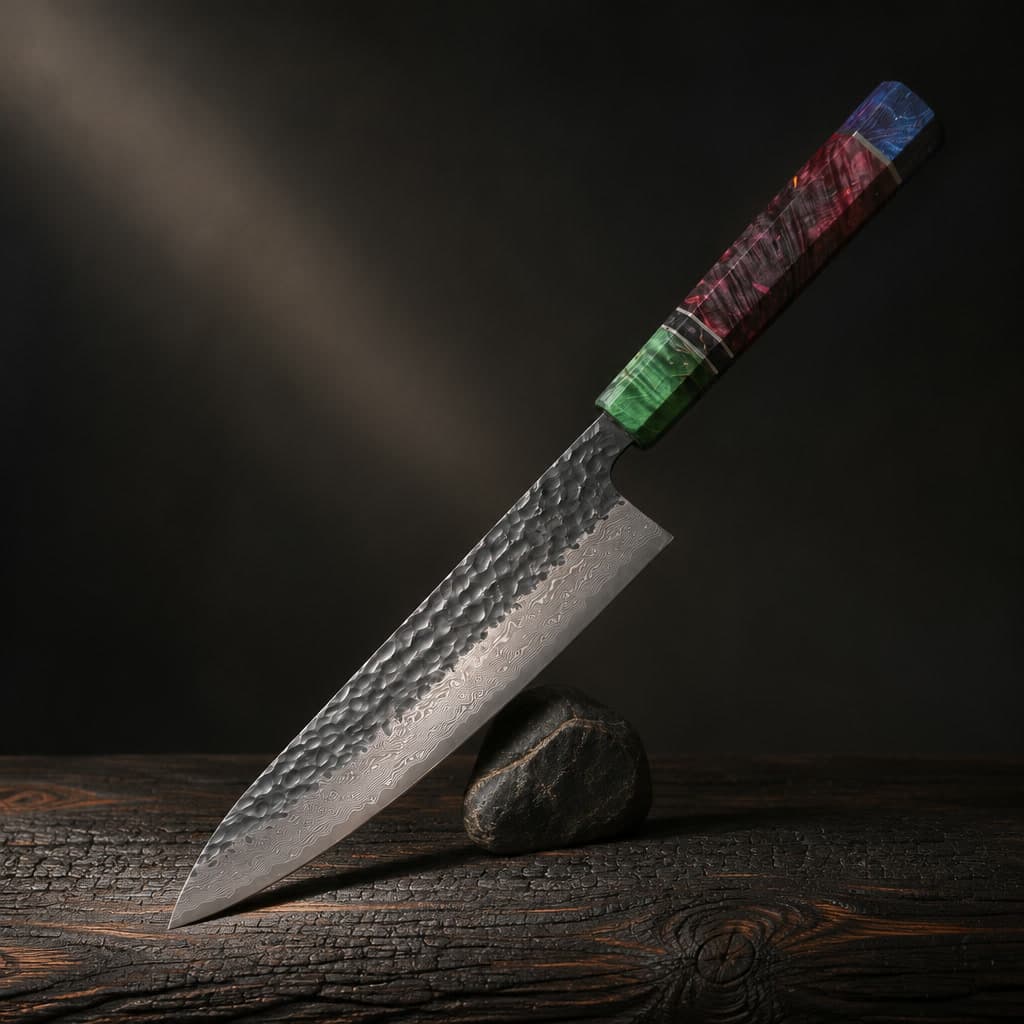
Traditional kiritsuke or modern kiritsuke-gyuto
The key thing to check when buying is whether the knife has a traditional single-bevel grind or a modern double-bevel build. Both may share an angled tip and a fairly flat profile, but they do not behave the same way in every respect.
Feature
Traditional kiritsuke
Modern kiritsuke-gyuto
Bevel
Single-bevel by tradition
Most often double-bevel
Blade profile
Long and fairly flat
From flat to gently curved, by design
Technique
Single-bevel specialist cuts
Standard double-bevel chef-knife technique
Sharpening
Calls for single-bevel sharpening know-how
Usually sharpened like any double-bevel knife
Typical user
Cooks practised in traditional Japanese knife work
Pro chefs and home cooks who want a K-tip profile
This table shows general trends, not rules that hold for every knife. Designs differ, so always go by the maker's specifications first.
HOW TO TELL WHICH VERSION YOU'RE BUYING
Begin with the product description. Look for a clear mention of single-bevel or double-bevel construction, then study the blade photos and the maker's sharpening advice.
Tip shape on its own won't tell you the bevel. A knife can wear the familiar kiritsuke outline and still have an ordinary double-bevel grind.
Think about what the blade is meant for, too. A traditional single-bevel knife may suit someone at ease with specialist Japanese cutting techniques, whereas a double-bevel kiritsuke-gyuto may be the more practical pick for cooks after an all-purpose chef's knife with a flatter edge.
Neither build is better by nature. The right one comes down to how you cut, how much sharpening experience you have, and the jobs the knife will do.
Blade design, geometry, and Japanese craftsmanship
The kiritsuke's shape serves a purpose; it isn't just for show. Edge geometry, tip, grind, steel, and heat treatment all shape how the finished knife cuts and how much care it needs.
THE ANGLED TIP AND THE FLAT EDGE
The angled point allows controlled fine work, including precise cuts where the tip must go into an ingredient exactly. It comes in handy for trimming and preparing garnishes, though how much control you get depends on the knife's geometry and your own technique.
A fairly flat edge also lends itself well to push cuts and draw cuts. Next to the stronger curve of a gyuto, this profile puts a longer stretch of edge in contact with the board during a straight downward cut.
That doesn't mean the kiritsuke is wrong for every cutting motion. The degree of curve differs from model to model, and your technique should follow the real blade profile. Cooks used to rocking cuts may find a well-curved gyuto feels more natural, while those who prefer controlled straight cuts may lean towards the flatter edge.
BEVEL, STEEL, HARDNESS, AND EDGE CARE
A single-bevel blade is ground mostly on one side, and in traditional Japanese construction the other face often has a hollow-ground area called urasuki. A double-bevel blade has its edge ground on both sides, though the angles and symmetry may differ.
Steel choice, hardness, and edge geometry are separate matters. The steel's makeup affects things like corrosion resistance and how hard it can get, while heat treatment helps decide how the blade performs. A thin, hard edge can cut superbly but may chip if it is twisted through food or used on the wrong ingredients.
No single steel grade, hardness figure, blade length, or edge angle defines every kiritsuke. Check those details against the specifications of the knife in question. Good craftsmanship comes from how material, heat treatment, grind, and intended use fit together, not just from a steel name or a hardness number.
What do you use a kiritsuke knife for?
Its intended jobs depend on whether you have a traditional single-bevel kiritsuke or a modern double-bevel kiritsuke-gyuto. Both can cut with precision, but their geometry and handling are not the same.
- Vegetable prep: The fairly flat edge lends itself to push cuts, slicing, and controlled straight cuts. Technique and blade height affect how easily the knife deals with different vegetables.
- Fish prep: The right kiritsuke can slice precisely, depending on its length and geometry. A traditional single-bevel design may call for more specialised handling than a double-bevel chef's knife.
- Fine detail work: The angled point lends itself to controlled trimming and garnish prep. Because it is pointed, handle it with care, especially as you move the knife around the chopping board.
- Everyday kitchen prep: A double-bevel kiritsuke-gyuto can take on a wide range of daily ingredients, much like any chef's knife. Whether it suits rocking cuts or heavier jobs depends on the specific design.
The kiritsuke cannot stand in for every specialist Japanese knife. Dedicated fish-slicing and vegetable knives, for instance, have their own geometry and well-established techniques.
Work on a steady chopping board with controlled motions. Don't twist or pry with the blade, chop through bones, or cut frozen food unless the maker clearly says the knife is built for that.
Kiritsuke compared with gyuto, santoku, and nakiri
Japanese kitchen knives are built around different blade shapes and cutting styles. Comparing them by what they're meant to do is more helpful than assuming one beats the others across the board.
Knife
Key trait
Best suited to
Kiritsuke
Angled point and fairly flat profile
Traditional specialist work or a modern K-tip chef's knife
Gyuto
Curved chef's knife profile
Wide-ranging, all-purpose prep with rocking or push cuts
Santoku
All-round blade with a rounded or sheep's-foot-style tip
Daily prep in a home kitchen
Nakiri
Rectangular blade, flat edge
Vegetable prep only
WHICH KNIFE IS RIGHT FOR YOU?
Pick based on the ingredients you cook most, the cutting motion you prefer, your sharpening experience, and the space you have to work in. For cooks who rely on rocking cuts or want a familiar all-purpose shape, a gyuto is often the more practical option.
A santoku works well for daily prep, while a nakiri is built for vegetables. A kiritsuke-gyuto may attract cooks who like a flatter edge and an angled point.
To go further, read the HOSHIGANE Japanese gyuto knife guide, Santoku knife guide, and Japanese Nakiri knife guide.
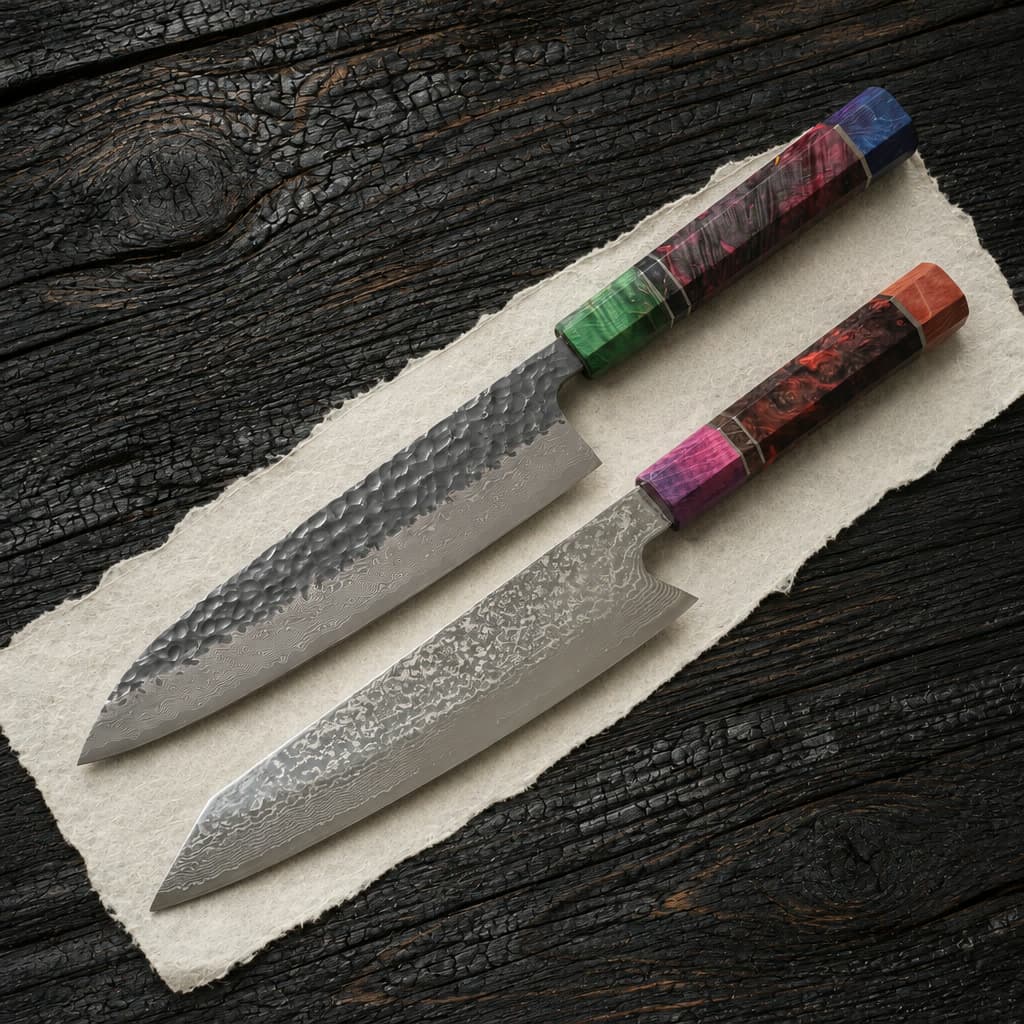
How to pick the right kiritsuke knife
There's more to choosing a kiritsuke than picking a recognisable blade shape. Weigh up these five points before you buy.
- Construction: Choose between a traditional single-bevel knife and a double-bevel kiritsuke-gyuto. Be honest about the technique and sharpening skills you have today.
- Blade length: Think about your chopping board, work area, ingredients, and comfort. A longer blade helps with long slicing strokes but can feel unwieldy in a small kitchen.
- Steel and upkeep: Compare corrosion resistance, sharpening needs, and the care the maker advises. The type of steel alone doesn't decide overall cutting performance.
- Handle and balance: Look for a sure grip and a balance point that feels right during controlled cuts. Handle shape, blade weight, and personal taste all play a part.
- Craftsmanship and specifications: Review the maker's details, blade geometry, grind, heat treatment where stated, and the declared country or region of manufacture. Favour clear specifications over vague performance claims.
If this is your first look at a kiritsuke chef knife, compare the real construction and intended use instead of buying it just for that eye-catching tip.
Browse the HOSHIGANE kiritsuke knife collection to compare the designs on offer and their published specifications.
How to use and look after a kiritsuke knife
Good care protects the edge and keeps the knife performing consistently. The exact routine depends on the steel and the bevel construction.
- Cut with control: Rely on push or draw cuts that suit the blade instead of forcing the edge through your ingredients.
- Wash and dry right away: Clean the knife as the maker instructs and dry the blade completely. Carbon steel usually needs closer watch for corrosion than stainless steel.
- Sharpen the right way: Traditional single-bevel knives need a different method from double-bevel ones. If the grind is new to you, turn to a specialist sharpener.
- Store it safely: Use a fitted knife guard, a saya, or other protective storage that keeps it away from other utensils and covers the pointed tip.
Don't twist, pry, or run the edge against hard surfaces. Even a well-kept knife needs the right technique; skilled sharpening can't make up for misuse.
For long-term upkeep, refer to a dedicated Japanese knife sharpening and care guide if the HOSHIGANE library has one.
Kiritsuke knives: frequently asked questions
WHAT DO YOU USE A JAPANESE KIRITSUKE KNIFE FOR?
A kiritsuke is used for precise slicing, vegetable prep, and controlled cutting. What it can do exactly depends on whether it has a traditional single-bevel or a modern double-bevel design.
WHY WAS THE KIRITSUKE TRADITIONALLY KEPT FOR HEAD CHEFS?
In some professional Japanese kitchens, the knife is linked with seniority and advanced technique. This custom should not be taken as a rule shared by every restaurant.
HOW DOES A KIRITSUKE DIFFER FROM A GYUTO?
A kiritsuke has a signature angled point and a usually flatter edge, whereas a gyuto generally has a more curved blade. Either can work as a versatile kitchen knife, depending on how it is designed.
IS A KIRITSUKE KNIFE A GOOD CHOICE FOR BEGINNERS?
A double-bevel kiritsuke-gyuto can work for beginners who are ready to build good technique. A traditional single-bevel kiritsuke usually calls for more specialised handling and sharpening skills.
HOW DOES A SINGLE-BEVEL KIRITSUKE DIFFER FROM A DOUBLE-BEVEL ONE?
A single-bevel blade is ground chiefly on one side, whereas a double-bevel blade has its edge ground on both. That difference alters how the knife cuts, how it is sharpened, and how it is looked after.